Overview
Our Mission, Vision and Values
Performance Highlights
Letter from Chair of the Cambridge University Endowment Trustee Body
CEO and Chief Investment Officer’s Annual Letter



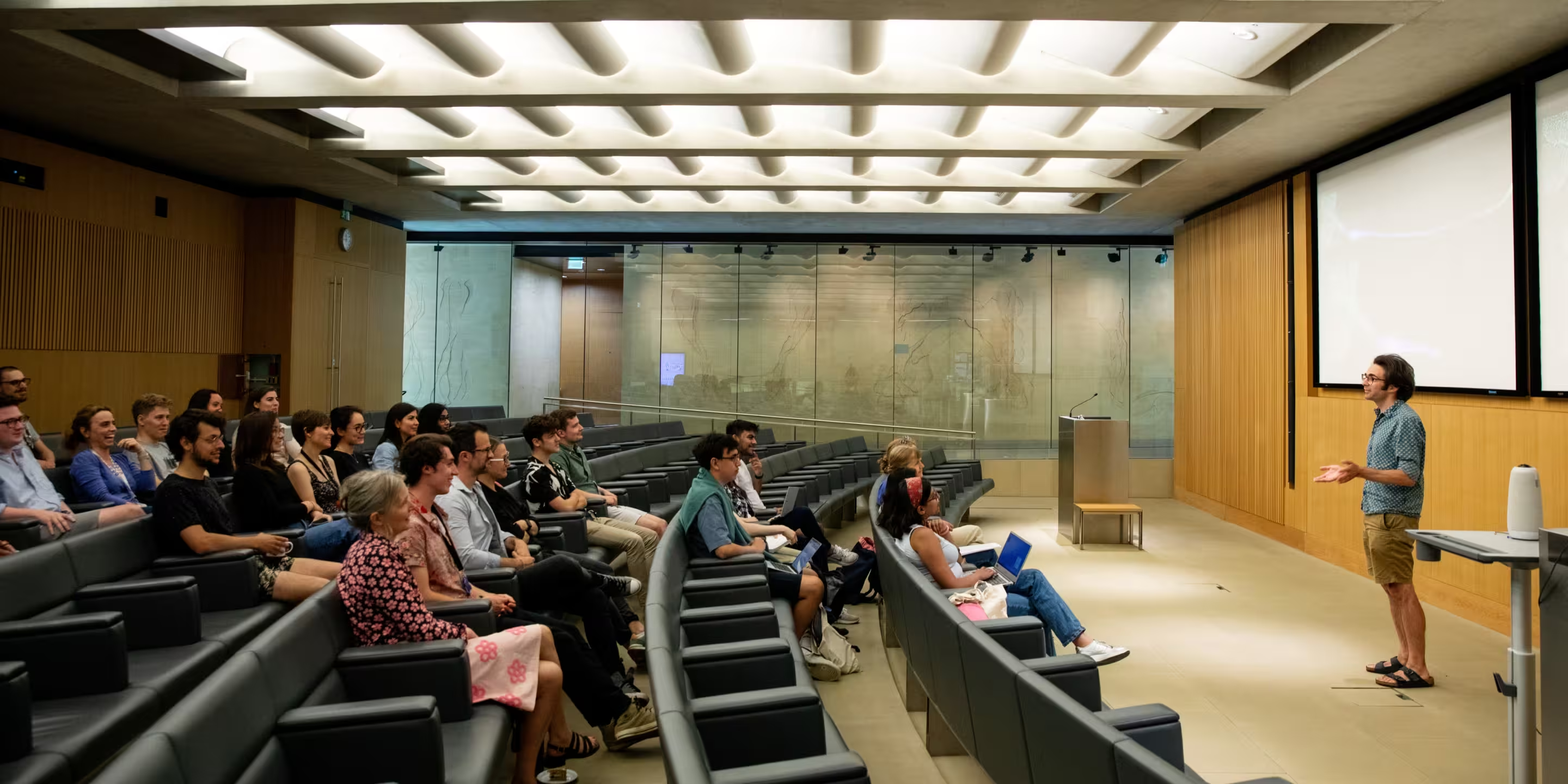

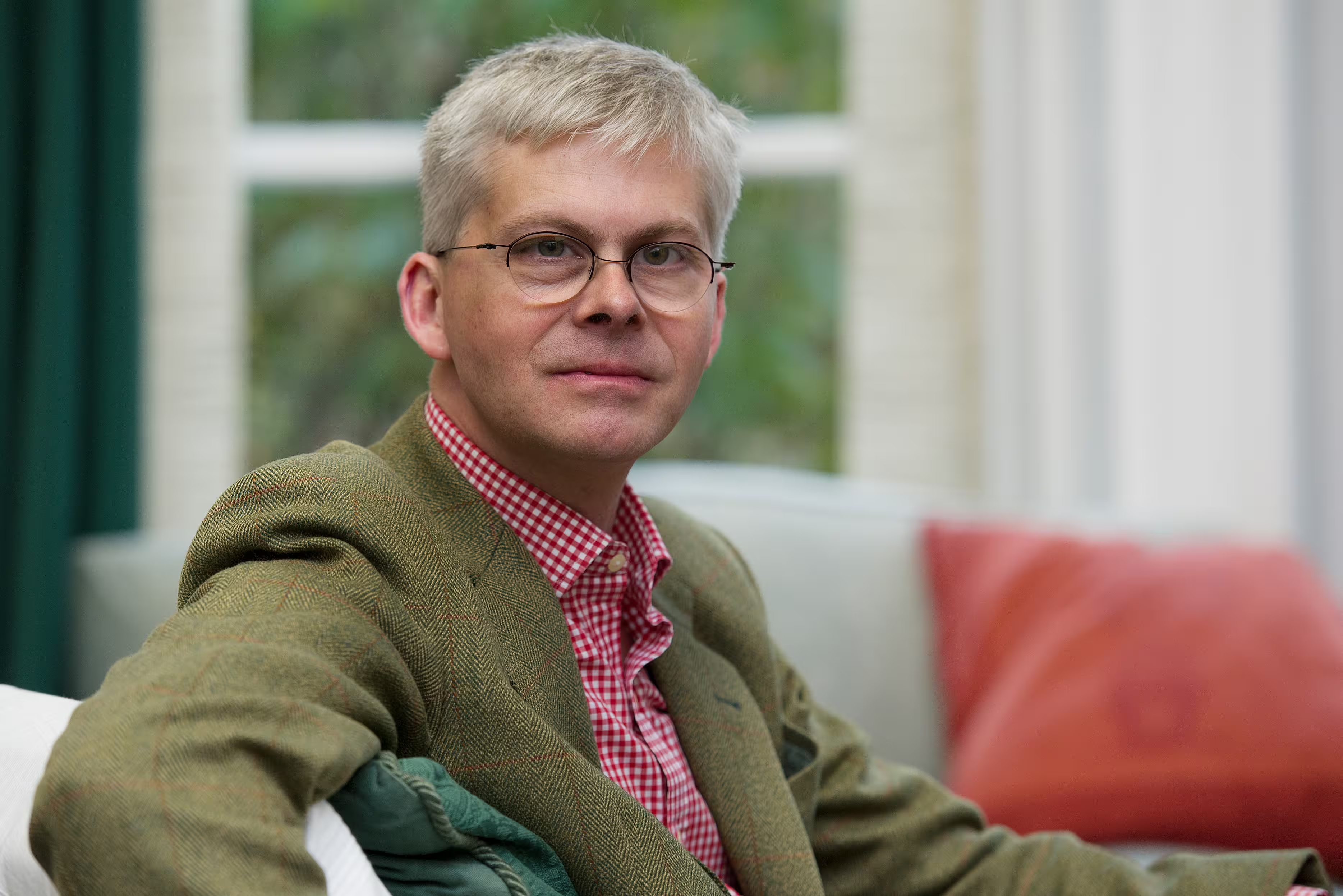
Professor Alexander Bird specialises in the philosophy of science, medicine, metaphysics and epistemology. With Professor Alison Hills, he has published papers challenging the standard view that creativity is defined by producing work that is both novel and valuable. They argue that creativity’s defining feature is that its results arise from imagination.
Alexander and Alison are co-authoring a book that extends philosophical inquiry into creativity beyond the arts to include science and broader human endeavour. Their work examines creativity’s links to madness, its relationship to artificial intelligence, its moral and artistic value, and its place in generating and evaluating scientific theories.


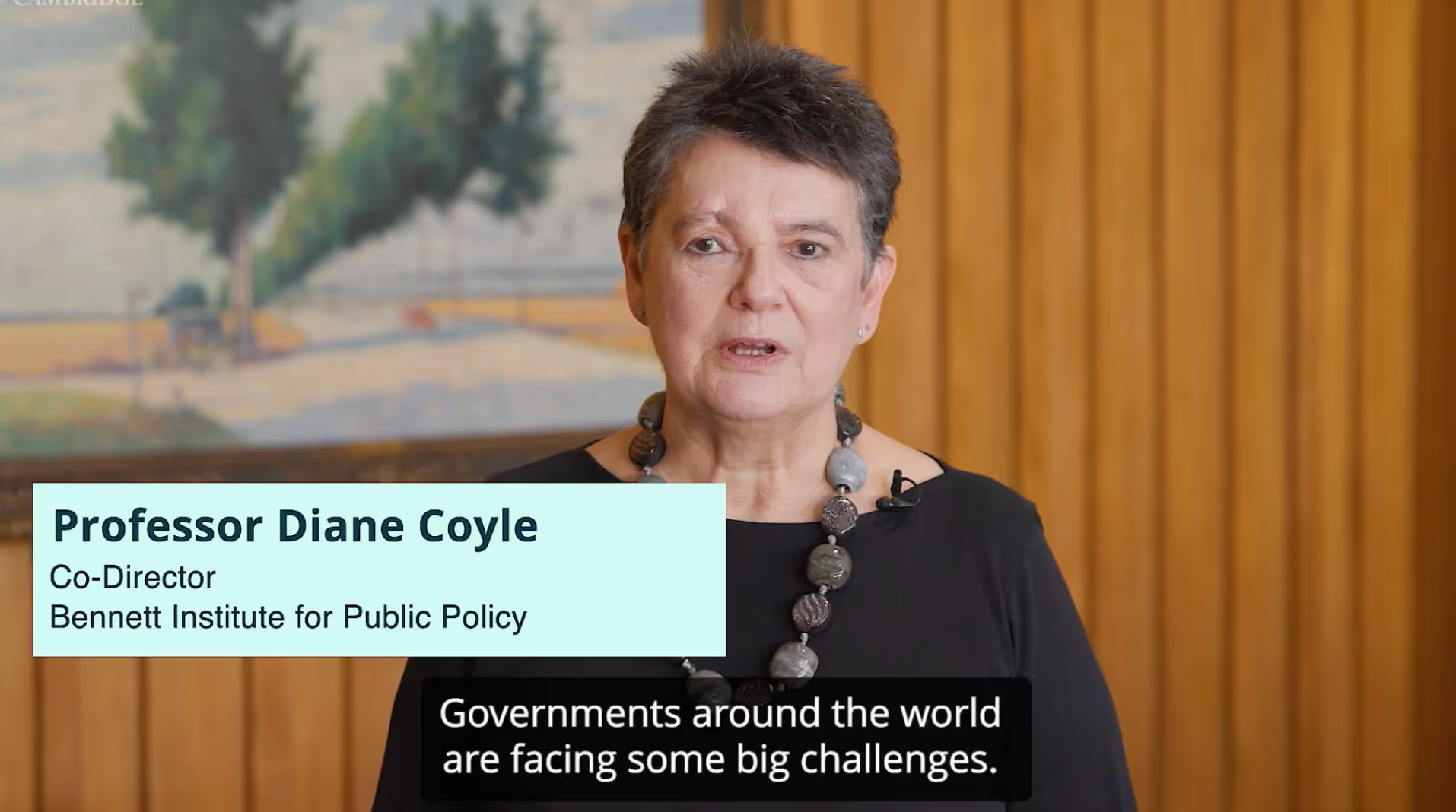
At the Bennett school for Public Policy, Professor Dame Diane Coyle’s mission, “the right kind of growth, fairly shared,” guides her teaching, research, and advisory work. She challenges conventional measures of progress, advocating for economic models grounded in well-being, sustainability, and inclusion.
Her policy work includes advising government bodies and working with statisticians to develop new economic measurement frameworks to reflect sustainable progress.
In digital policy, she promotes governance that balances innovation with fairness, warning that unchecked network effects can create “winner-takes-most” markets. Starting in 2026, she will direct the Bennett School’s MPhil in Digital Policy, an interdisciplinary course tackling online safety, regulation, and technology-driven growth.


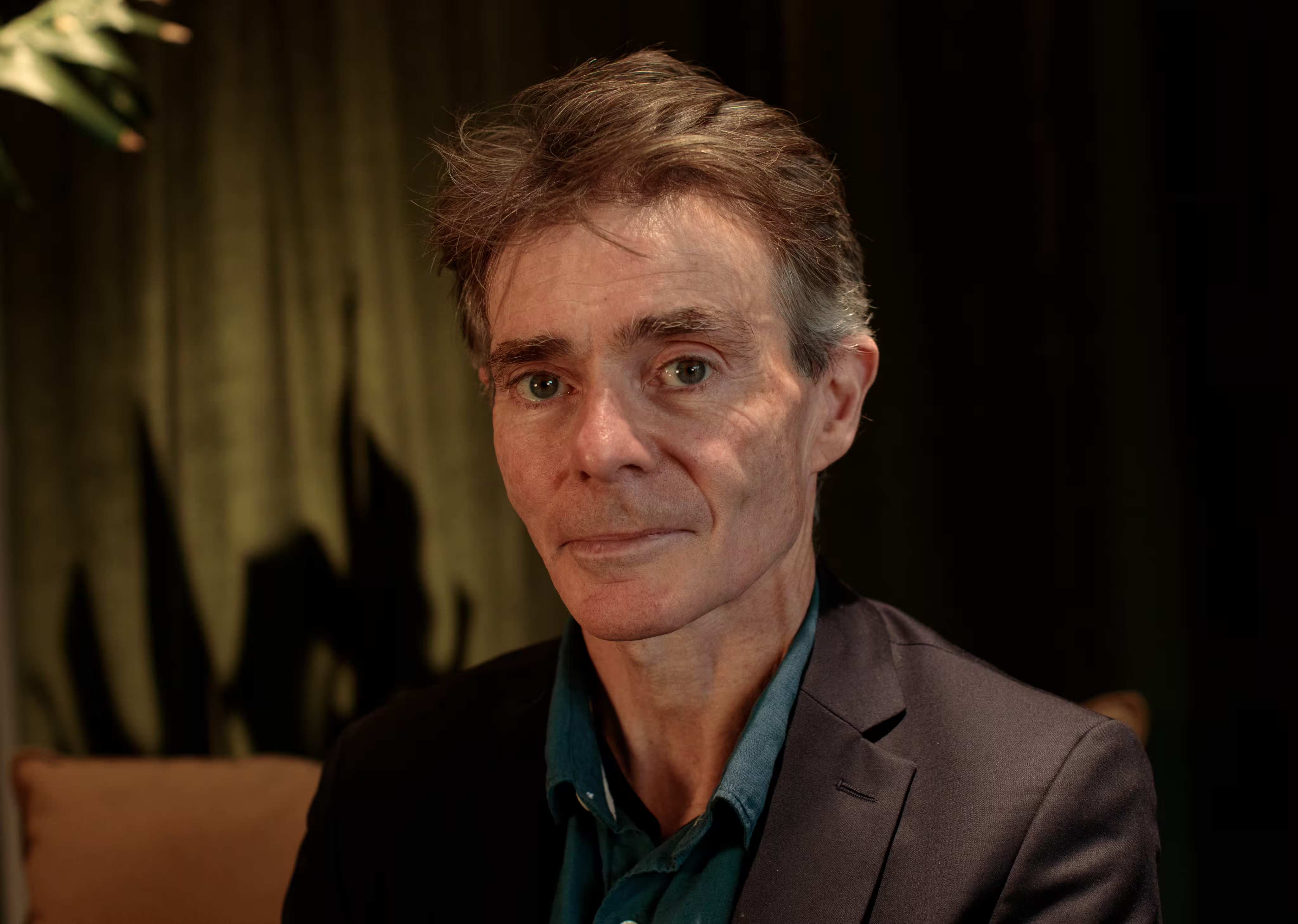
Dr Julie Pham is the founder and CEO of Curiosity Based, a consultancy that helps organisations build trust and collaboration through curiosity. She sees curiosity as a skill to be developed: “Curiosity is hard because we all have expectations but exploring them helps us learn about ourselves and others.”
An academic turned entrepreneur, Pham developed her curiosity framework while leading teams in technology and media. Her bestselling book, 7 Forms of Respect: A Guide to Transforming Your Communication and Relationships at Work, encourages people to get curious about how they define respect.
Travelling from Seattle to Cambridge was her first international flight since arriving in the US from Vietnam as a baby.

Professor Paul Fletcher, a psychiatrist and cognitive neuroscientist, explores how belief and perception interact, and how this relationship can break down in psychosis. He argues that perception and belief are inseparable, as even healthy minds interpret the world through prior experience.
Collaborating with game developers Ninja Theory and people with lived experience of psychosis, Paul uses video game design for representation and treatment in psychiatry. The first game, Hellblade: Senua’s Sacrifice, won five BAFTAs and a Royal College of Psychiatrists award for its portrayal of mental illness. Its sequel, Senua’s Saga: Hellblade II, earned Best Technical Achievement at the 2025 BAFTA Games Awards. The team is now developing a series of interactive experiences to help people manage stress.

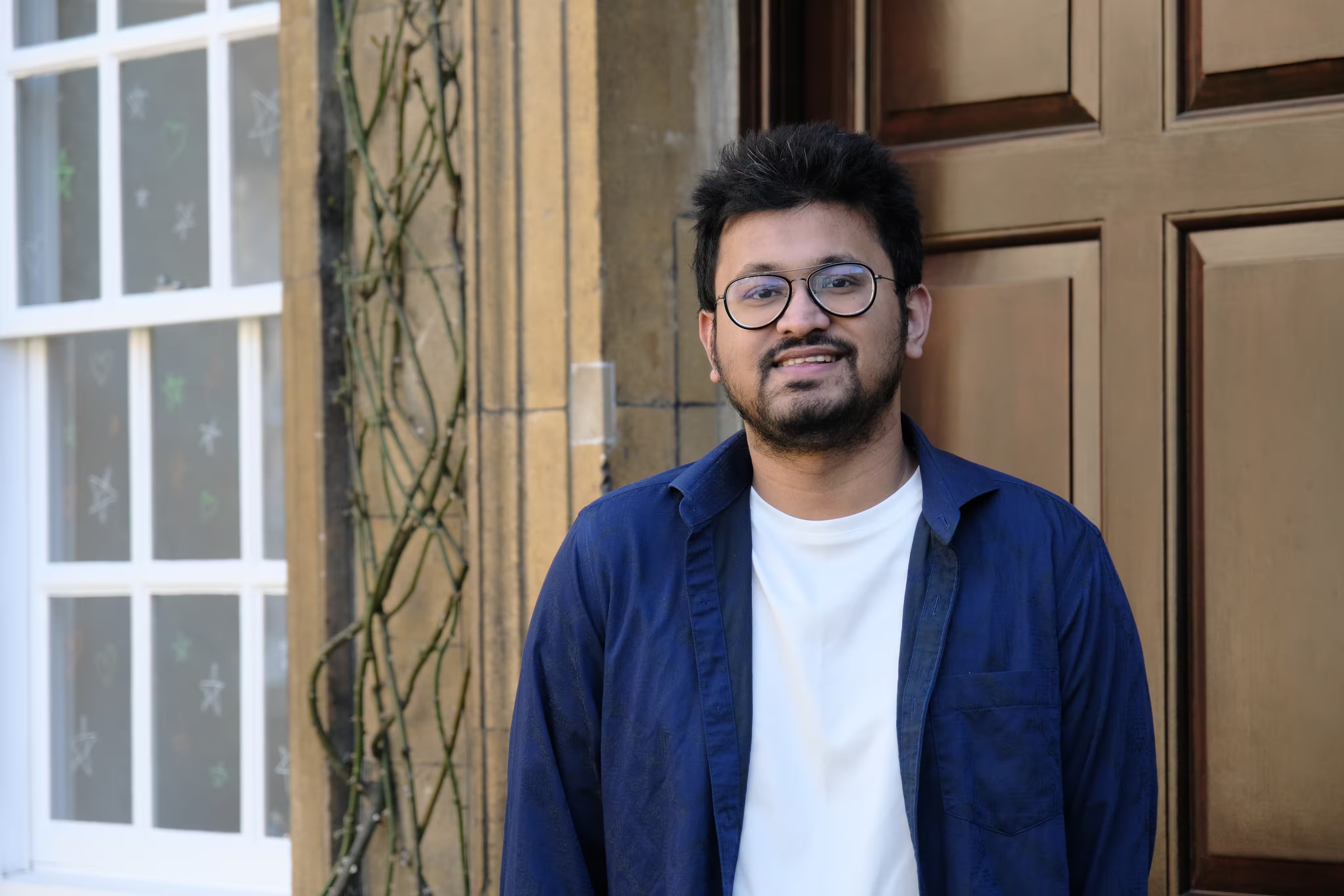
Abdullah Hasan Safir came to Cambridge in 2023 to study for an MPhil in AI Ethics, exploring how the field overlooks Global South perspectives. Now, thanks to a Gates Cambridge Scholarship, he is pursuing a PhD in Interdisciplinary AI Design with the Cambridge Collective Intelligence and Design Group. His research explores how indigenous knowledge in Bangladesh can guide the creation of more inclusive AI systems by influencing data practices and algorithm design to ensure that technology truly benefits local communities.
Safir authored a paper for the Association for Computing Machinery this year, based on a study which analysed nearly 6,000 AI ethics publications and revealed how Global South voices are often sidelined, perpetuating epistemic inequality in the field.
.avif)

Endowment income plays a vital role in supporting Wolfson College’s mission and community. In 2024/25, the College funded 320 awards including scholarships, bursaries, hardship, travel,prizes, and sports awards, through the Cambridge University Endowment Fund (CUEF). This income also underpins essential projects such as building maintenance and the expansion of student accommodation.
University of Cambridge Investment Management Limited (“UCIM”) is authorised and regulated by the Financial Conduct Authority in the UK with reference number 515843. UCIM is a private limited company incorporated in England and Wales with company number 06907395. Its registered address is The Old Schools, Trinity Lane, Cambridge CB2 1TN, UK. UCIM is the investment manager of the Cambridge University Endowment Fund (the “Fund”) which is an unregulated collective investment scheme as defined in section 235 of FSMA. The Fund is not available to the general public for investment. The purpose of this website is to inform visitors about UCIM’s business and activities. The information on this website, including all opinions or other content, is not intended to and does not constitute financial, accounting, tax, legal, investment, consulting or other professional advice or services but is for information purposes only. To the extent that this website contains information regarding past performance, you should be aware that past performance is not indicative of future results. UCIM and the Fund are not authorised or regulated in any country outside the UK and it may be unlawful to access the content of this website from outside the UK. If you choose to access information on this site, you do so at your own risk and it is your responsibility to comply with the applicable laws and regulations in countries outside the UK, including in particular, the United States of America. By entering this website you confirm agreement with the above information. For further detail, please read the Important Information page and our Privacy Policy.